Civic Graph

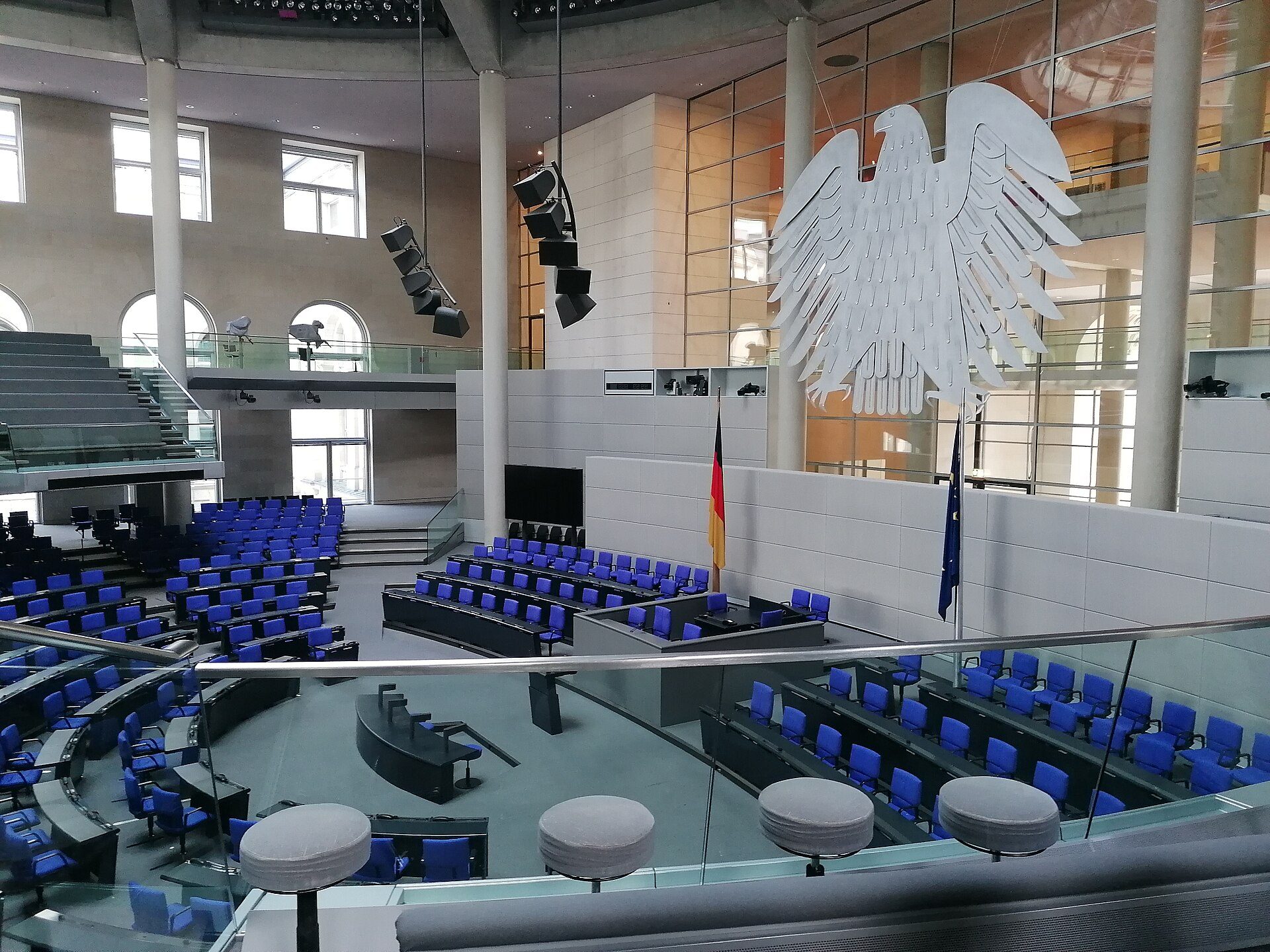
German Bundestag · Plenary chamber

Public argument,
made legible.

Every parliamentary vote leaves a paper trail — claims, lobby interests, conflicts. We structure it so you can follow the money.

Case studyGEG § 71
New heating systems must use at least 65 % renewable energy — the Federal Government presented this core requirement as a climate-policy imperative.
Vote8 September 2023CDU/CSU171 × NoSPD202 × YesGrüne112 × YesFDP82 × Yes
Lobby connectionWirtschaftsrat der CDU e.V.€6.1M lobbying spend· registered for: Energy (overall), Energy (fossil)
Open full case studySource: Lobbyregister (CC-BY-SA 4.0) · abgeordnetenwatch.de (CC0)
Bundestag plenary chamber · Photo: Chaddy, CC BY-SA 4.0, via Wikimedia Commons

Live data · GEG claim graph
CLAIMBündnis 90/Die Grünen

Die breite Palette an Heizungsoptionen sichert eine bezahlbare Wärmeversorgung und verringert die Abhängigkeit von fossilen Energieträgern.

CONTESTED BY

Die Wärmepumpe macht nur einen Bruchteil der Gesamtsanierungskosten aus, die die Bürger überwiegend selbst tragen müssen; das Gesetz werde die Bürger 2.500 Milliarden Euro kosten.

AfD
VOTE
383 Yes265 No63 Abstain
LOBBY
  • BDEW Bundesverband der Energie- und Wasserwirtschaft e.V.
  • BDH Bundesverband der Deutschen Heizungsindustrie e.V.
  • Haus & Grund Deutschland

3452 registered organisations on this law

Track contested claims, lobby connections, and voting records for every Bundestag law.

GEG· Heizungsgesetz

Gebäudeenergiegesetz 2023

Claims19
Lobby actors3452
9 Relations
WPG· Fernwärmegesetz

Wärmeplanungsgesetz 2023

Claims13
Lobby actors3447
6 Relations

What this is — and is not

A narrow, honest first slice is more useful than broad promises. We're explicit about the boundaries before anything else.

It is
  • A versioned graph of claims, evidence, arguments, and counter-arguments — not opinions
  • A structured record of how a public deliberation unfolds, step by step
  • Starting with one real German Bundestag proceeding — scope is intentionally narrow
  • Built for analysts: journalists, NGO researchers, and policy staff
  • AI proposes structure; human analysts review and govern every output
It is not
  • A surveillance tool or personal data collector
  • An opinion platform, fact-checker, or editorial voice
  • A replacement for journalism or expert analysis
  • A general entity graph of politicians, contracts, and procurement
  • A deployed or monetised product — we are in private development

The deliberation thesis

Democratic accountability requires that the process of knowing and deciding be structured, searchable, and independently verifiable — not locked in PDFs and press releases.
01

Traceable

Every claim links to its source passage; every counter-argument links to what it disputes. Nothing floats free. Traceability isn't a feature — it's the discipline.

02

Structured

Empirical disputes — about data or method — are distinguished from value conflicts. Making that distinction explicit is what makes deliberation legible.

03

Human-governed

AI extracts candidate claims and arguments; human analysts review, correct, and approve every output. AI proposes; humans govern. No output bypasses review.

One proceeding, end to end

A single complete vertical slice — not a broad platform. We begin with one real Bundestag proceeding and work from there.

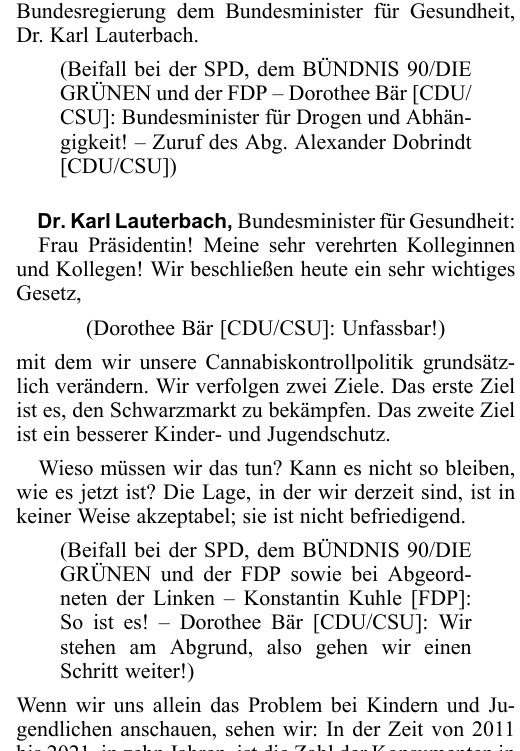
Excerpt from stenographic report 20/155 of the German Bundestag, 23 February 2024: Health Minister Karl Lauterbach opens the debate on the Cannabis Act (Cannabisgesetz), stating two goals and citing a rise in youth consumption.
Raw inputPlenarprotokoll 20/155 · 23 Feb 2024 · Cannabisgesetz (CanG) · Drs. 20/8704

extraction→ candidates from this passage, every one linked to its source line

ClaimLauterbach · SPD

Two stated goals: fight the illicit market, and improve child and youth protection.

Evidenceempirical · cited in debate

Consumers aged 18–25 rose by 100 % over 2011–2021 — the figure the claim rests on.

Counter-argumentDobrindt · CDU/CSU

„Und jetzt wollen Sie sie weiter erhöhen!“ — legalisation will worsen, not improve, protection.

Nothing here is invented — each candidate is a verbatim structure drawn from the page on the left, held for a human analyst to approve or reject.

  1. 01

    Import

    One real German Bundestag legislative proceeding, preserved with full provenance — source document, date, speaker identity, and passage position.

  2. 02

    Extract

    AI models propose candidate claims, evidence, and arguments from the document text. Every proposal is stored as a candidate, not a fact.

  3. 03

    Review

    A human analyst reviews, corrects, and approves the AI proposals. The core discipline: AI proposes, humans govern. No output bypasses this step.

  4. 04

    Produce

    Two outputs: an analyst debate map showing argument structure, and a plain-language citizen brief with every claim linked to its source passage.

  5. 05

    Validate

    We test whether a journalist, NGO analyst, or policy researcher finds the outputs genuinely useful — before we expand scope.

statusearly private development · no public deployment · scope: one Bundestag proceeding, fully human-reviewed before expansion.

Live demo · Gebäudeenergiegesetz

One proceeding, fully structured

The Gebäudeenergiegesetz (GEG) 2023 — ingested, extracted, and structured into a traversable claim graph. Open to inspect now, before scope expands.

GEG · Drs. 20/6875Beschlussempfehlung 20/7619

GEG claim graph · Sept 2023

Claims, counter-arguments, and evidence from the GEG legislative proceeding — structured, linked to their source passages, and traversable. Hypothesis-level extractions; analyst review in progress.

Source: Deutscher Bundestag · DIP Vorgang 298723 · open access

Civic Graph Whitepaper

in progressInternal draft — not yet published

The full whitepaper is in progress. It will describe the data model, provenance chain, entity resolution approach, and governance philosophy behind Civic Graph.

Content source: docs/whitepaper/whitepaper.md

Call for collaborators

We're looking for a small number of people who care deeply about democratic transparency and want to help shape the first real slice.

Journalists & policy researchers

Our intended first user. Help us understand what an analyst debate map needs to show — and whether the citizen brief format actually works.

Civic technologists

Interested in building on a structured deliberation graph? Talk to us early about integration and use-cases.

Computational linguists

Help improve claim and argument extraction from German parliamentary language and proceedings.

German politics domain experts

Review the Bundestag pilot for accuracy of extracted claims, argument structure, and political context.

We're deliberate about who we work with — small, high-trust, and mission-aligned. This is early-stage work with a narrow scope; the right collaborators find that honest.

Working title: Civic Graph · public brand deferred.

hello@civicgraph.io